

Did you know that over 60% of American homes have bathrooms smaller than 50 square feet? That’s a lot of compact spaces needing smart design solutions. Many homeowners feel overwhelmed by the thought of improving these challenging areas, but we’re here to change that perspective.
When you’re working with limited square footage, every design decision carries significant weight. The right choices can completely transform a cramped, outdated area into an efficient and beautiful room that feels surprisingly spacious. We’ve seen countless success stories where clever layouts and strategic fixtures made tight spaces feel open and inviting.
Throughout this comprehensive guide, we’ll share proven strategies and creative solutions gathered from successful transformations across the country. Whether you’re dealing with a compact powder room or a narrow full bath, we’ll help you navigate the unique challenges and opportunities. Our goal is to empower you with knowledge and inspiration to create a functional retreat that reflects your personal style.
Content
- 1 Introduction to Remodeling a Tiny Bathroom
- 2 Expert Guide to Remodeling Tiny Bathroom and Maximizing Space
- 3 Planning Your Layout for Optimal Functionality
- 4 Budget-Friendly Renovation Tips for Small Bathrooms
- 5 Creative Small Bathroom Design Ideas
- 6 Choosing Light Colors to Enhance a Small Space
- 7 Tile, Fixtures, and Finishes for Small Bathrooms
- 8 Utilizing Mirrors and Lighting to Expand Visual Space
- 9 Custom Vanity and Storage Solutions for a Tiny Bathroom
- 10 Innovative Remodeling Tiny Bathroom Techniques
- 11 Incorporating Modern Plumbing and Fixtures
- 12 Enhancing Small Bathroom Lighting Strategies
- 13 Inspiring Before and After Remodel Stories
- 14 Integrating New Design Trends Into Your Renovation
- 15 In-Person Consultation and Office Visits
- 16 Conclusion
- 17 FAQ
- 17.1 How can we make our small bathroom feel larger?
- 17.2 What are some budget-friendly storage ideas for a compact room?
- 17.3 What type of vanity works best in a tight area?
- 17.4 Should we use large or small tiles on the floor and shower walls?
- 17.5 How important is lighting in the design?
- 17.6 Can we still have a tub in a small space?
Key Takeaways
- Smart design choices can make small spaces feel much larger than their actual dimensions
- Every square inch matters when working with compact bathroom areas
- Proper planning and layout optimization are crucial for successful transformations
- The right fixtures, colors, and finishes can create an open, bright atmosphere
- Even the most challenging spaces can become beautiful, functional retreats
- Strategic design enhances both practicality and personal style expression
- Well-executed improvements can significantly increase your home’s overall value
Introduction to Remodeling a Tiny Bathroom
Compact bathrooms present exciting challenges that push creative boundaries and maximize every inch available. We recognize that these small spaces require different thinking than larger areas. Every design decision carries more weight when square footage is limited.
When we plan a small bathroom remodel, we focus on how you actually use the space daily. What frustrations does your current layout cause? What would make your routine more enjoyable? The good news is you don’t need a massive budget to create a luxurious, organized retreat.
We’re committed to inclusive design language throughout this guide. You’ll notice we use terms like “primary bathroom” rather than outdated alternatives. This reflects our belief that beautiful spaces should welcome everyone.
| Common Challenges | Creative Opportunities | Practical Solutions |
|---|---|---|
| Limited floor space | Vertical storage ideas | Wall-mounted fixtures |
| Cramped feeling | Strategic lighting plans | Large mirrors |
| Storage shortages | Multi-functional furniture | Custom vanity designs |
Whether you’re planning a complete renovation or a strategic refresh, understanding small bathroom fundamentals helps immensely. We’ve seen countless compact spaces transform into functional, stylish retreats. Let’s explore how to make your small bathroom a space you truly love.
Expert Guide to Remodeling Tiny Bathroom and Maximizing Space
The secret to successful compact bathroom transformations lies in strategic design choices that create the illusion of spaciousness. We’ve gathered insights from top designers who specialize in making small areas feel expansive and functional.
One of our favorite bathroom ideas involves keeping floors clear. Floating vanities or pedestal sinks create visual openness where bulky cabinets might cramp the area. This simple change dramatically improves how the room feels.
Glass shower enclosures work wonders in compact settings. They eliminate visual barriers that traditional curtains create. Your eye can travel freely through the entire space, making it feel significantly larger.
Many people mistakenly choose small patterns for small spaces. We recommend medium to large-scale designs instead. These create better visual scale and make rooms feel more expansive.
High-gloss finishes reflect light beautifully throughout your bathroom. They amplify both natural and artificial lighting. This technique adds depth and brightness to any compact area.
Always think vertically when planning your small space design. Utilize wall storage and extend elements to the ceiling. Drawing the eye upward creates a wonderful sense of height.
The key to exceptional small bathroom design is visual continuity. Consistent colors and minimized clutter help elements flow together harmoniously. This approach creates a cohesive, spacious feeling in your limited area.
Planning Your Layout for Optimal Functionality
Before we make any changes to your bathroom, we carefully evaluate how the current configuration serves your needs and where improvements can make the biggest impact. This thoughtful approach ensures every decision enhances your daily experience.
Assessing Current Space and Fixtures
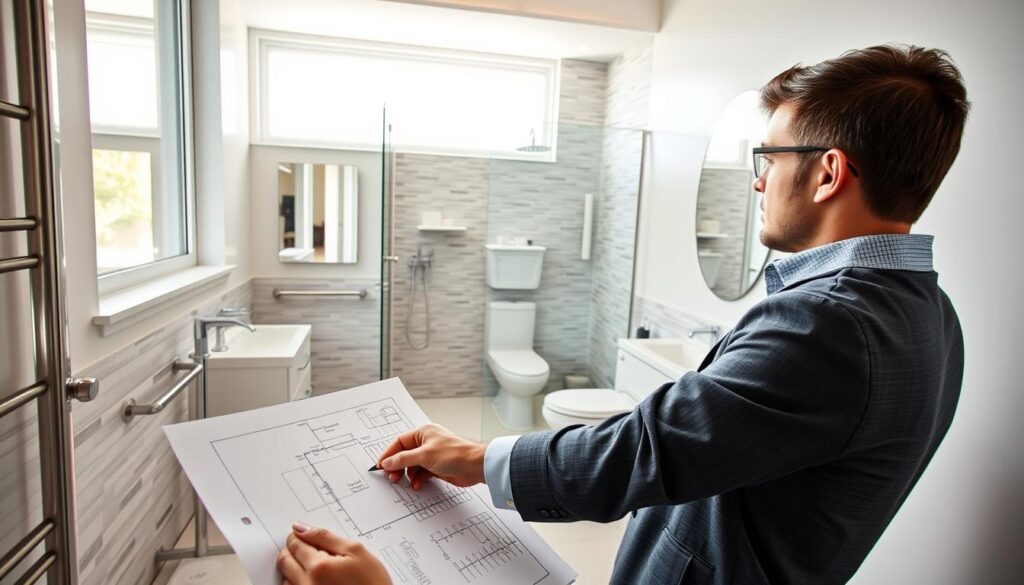
We begin by measuring your entire bathroom space and documenting existing elements. This includes plumbing locations, electrical outlets, and architectural features. Understanding what you’re working with helps us identify smart opportunities.
When evaluating fixtures, we consider their condition and positioning. Keeping well-placed elements can save significant costs. This strategy frees up budget for quality finishes that transform the room.
Setting Realistic Goals and Timelines
We help you balance wish lists with practical constraints. Prioritizing must-haves versus nice-to-haves creates a focused plan. This approach ensures your project stays on track.
Timeline planning is crucial since bathroom work affects daily routines. We outline each phase from demolition to final installation. This clarity helps you prepare for the transformation process.
By thoroughly assessing your space first, we create strategic plans that maximize potential. This method respects your budget while delivering beautiful, functional results.
Budget-Friendly Renovation Tips for Small Bathrooms
Creating a beautiful functional space doesn’t have to drain your savings—we’ve helped countless clients achieve stunning results on modest budgets. Real-world examples show complete transformations for $1,500-$2,000 when homeowners employ smart strategies.
One of our top money-saving techniques involves painting existing tile instead of replacement. With proper preparation, you can refresh dated surfaces for a fraction of the cost. This approach keeps your project budget manageable while delivering dramatic visual changes.
Maintaining your current plumbing layout is perhaps the single most effective cost-control method. Moving fixtures like toilets or sinks adds thousands in plumbing and structural work. Working with existing connections preserves your budget for impactful upgrades.
We love peel-and-stick flooring options that have improved significantly in quality. These DIY-friendly solutions offer weekend installation possibilities. They provide the look of traditional tile without professional installation costs.
Strategic shopping at stores like IKEA for vanities followed by customization creates high-end appearances. Adding upgraded hardware or unique legs transforms basic pieces into custom-looking fixtures. This approach maximizes your renovation dollars beautifully.
Focus your spending on elements that create the biggest visual impact. A new vanity, upgraded lighting, and statement mirror often transform the room more effectively than expensive tile work. DIY efforts like painting or demolition can stretch your bath remodel budget significantly.
Smart budget allocation means investing in quality fixtures you use daily while saving on decorative elements. This balanced approach ensures your small bathroom remodel delivers both functionality and style without financial stress.
Creative Small Bathroom Design Ideas
We’ve discovered that the most successful small bathroom transformations often break traditional design rules. Our favorite small bathroom ideas challenge conventional thinking about what’s possible in compact spaces.
These innovative approaches create rooms that feel much larger than their actual dimensions. They transform cramped areas into functional, beautiful retreats.
Maximizing the Shower Area and Tub Space
Walk-in showers with glass doors or doorless designs create wonderful openness. They eliminate visual barriers that make spaces feel confined.
If you need to keep a tub, consider space-saving options like Japanese soaking tubs. These provide luxurious bathing experiences in smaller footprints than standard American models.
Built-in shower niches are game-changers for organization. They replace bulky caddies with sleek, integrated storage for your shower items.
Innovative Storage Solutions
We encourage creative thinking about storage solutions. Floating shelves, narrow cabinets, and ladder-style towel racks maximize every inch.
Corner sinks free up valuable floor space while maintaining full functionality. Glass elements throughout your design maintain visual openness.
Don’t overlook simple updates like decorative shower curtains with tension rods. They can transform a room’s aesthetic without permanent installation.
Repurposing furniture as vanities adds character while providing smart storage. Every solution should enhance both practicality and style.
Choosing Light Colors to Enhance a Small Space
We often find that color choice is the most underestimated element in creating spacious-feeling environments. The right palette can genuinely transform how a room appears to the eye.
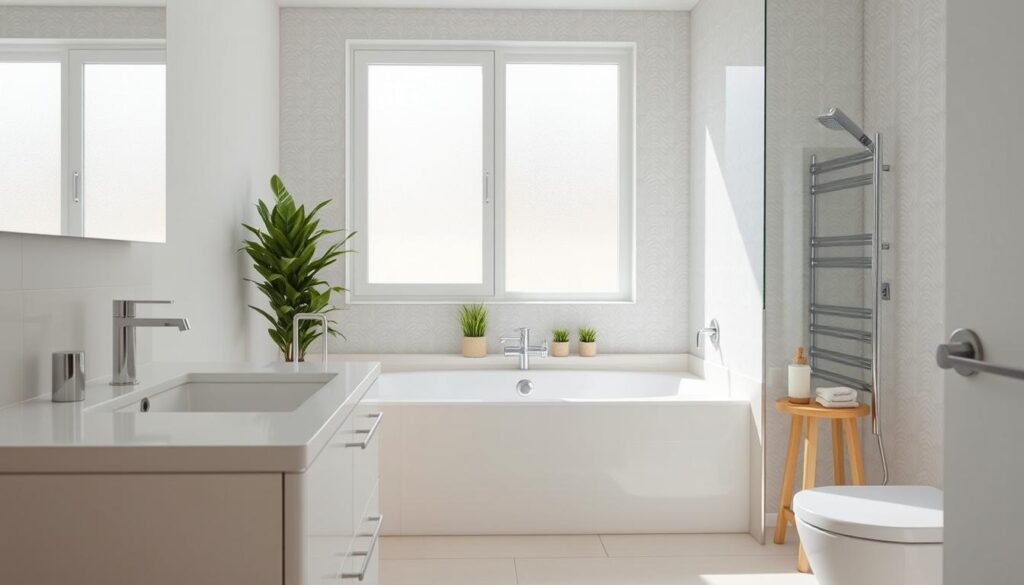
Light hues reflect both natural and artificial light beautifully. This creates an airy atmosphere that makes the space feel more open than its actual dimensions.
Soft whites, pale grays, and gentle beiges work wonderfully in compact areas. Pastel shades like mint green also provide serene backdrops for daily routines.
Paint offers one of the most budget-friendly ways to transform your bathroom. When you extend the same color across walls and ceiling, it creates visual continuity that helps make small areas feel larger.
If you have a window, light colors maximize natural illumination. They bounce sunlight throughout the space, creating bright, welcoming environments.
Interestingly, dark colors can also work strategically in a small bathroom. Deep charcoal in high-gloss finishes creates dramatic depth that makes walls recede.
The key to sophisticated color schemes lies in layering different tones and textures. This creates visual interest without fragmenting the space feel.
We always recommend testing paint samples in your actual bathroom at different times. Lighting conditions dramatically affect how colors appear and help the area feel larger.
Tile, Fixtures, and Finishes for Small Bathrooms
Tile patterns and fixture selections play a crucial role in defining the character of your limited-space wash area. These elements work together to create a cohesive design that feels intentional and spacious.
Selecting the Perfect Tile Pattern
We believe tile choice significantly impacts your bathroom‘s overall look. Classic subway tiles remain popular for their timeless appeal. Using black grout creates contemporary contrast that adds definition.
Herringbone and diagonal patterns create visual movement. This draws the eye along the pattern rather than focusing on room dimensions. Large-format tiles minimize grout lines for a cleaner appearance.
| Tile Type | Visual Effect | Best Applications | Budget Consideration |
|---|---|---|---|
| Subway Tiles | Timeless, versatile look | Walls, shower surrounds | Very affordable |
| Large-Format Tiles | Expansive, seamless appearance | Floors, feature walls | Moderate cost |
| Mosaic Tiles | Textured, detailed look | Accent walls, borders | Budget-friendly accents |
| Terrazzo Tiles | Modern, artistic appeal | Flooring, statement areas | Higher investment |
Coordinating Fixtures with Your Design
Your fixtures should complement your tile selections beautifully. Consistent finishes create visual harmony throughout the space. Choose matching finishes for faucets, showerheads, and hardware.
Consider glass elements to add elegance and light reflection. A unique sink or statement hardware can become focal pieces. These touches personalize your bathroom while maintaining functionality.
Don’t forget your floor when planning tile strategy. A distinctive pattern anchors your entire design scheme. Extending tiles to ceiling height creates vertical continuity.
Utilizing Mirrors and Lighting to Expand Visual Space
The clever use of mirrors and lighting can completely transform how you experience a compact washroom. We’ve seen these elements make small areas feel remarkably spacious through strategic placement and design.
A large mirror does more than provide reflection—it literally doubles your visual space. When you cover an entire wall from counter to ceiling, the effect is dramatic. This approach creates depth that makes the room feel twice its actual size.
Backlit mirror options offer modern solutions. They provide excellent task lighting while eliminating separate fixtures. This keeps your wall space clean and uncluttered.
Strategic mirror placement can capture natural light from a window. This brightens the entire bathroom and creates outdoor connections. The reflection expands the perceived boundaries beautifully.
Layered lighting creates inviting atmospheres. We combine ambient ceiling light with task lighting near the mirror. Accent lighting highlights architectural features too.
Sconces flanking your mirror provide shadow-free illumination. They keep counters clear while adding sophistication. Pendant lights draw eyes upward, enhancing the sense of height.
Glass shower door options maintain sight lines throughout the room. They prevent visual barriers that opaque materials create. This continuity makes the entire space feel unified and expansive.
Custom Vanity and Storage Solutions for a Tiny Bathroom
We believe that custom storage solutions are the key to unlocking the full potential of your compact wash area. The right vanity and cabinet configuration can transform even the most limited space into an organized, functional retreat.
DIY Vanity Options
Repurposed furniture pieces like vintage dressers or nightstands make wonderful vanity bases. These unique items add character while providing exactly the storage you need. With some plumbing adjustments, they become functional centerpieces.
For budget-friendly options, we love starting with affordable IKEA vanities. Adding custom hardware or decorative legs creates a high-end look. Floating vanities keep your floor visible, making the area feel more open.
Floating Shelves and Compact Cabinets
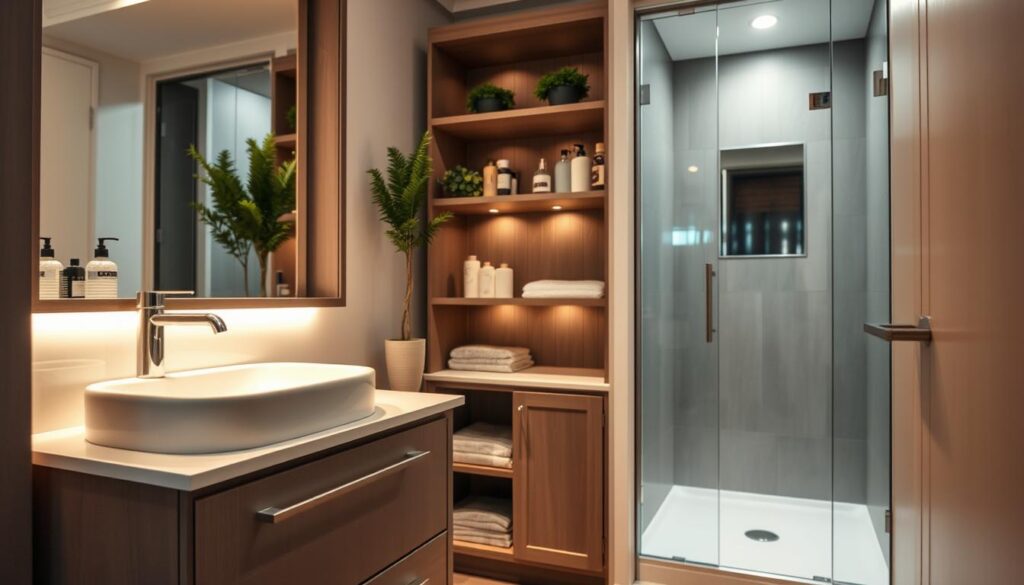
Vertical space is prime real estate in any small space. Floating shelves above the toilet or sink provide perfect storage for towels and items. They keep necessities accessible without cluttering your floor area.
Medicine cabinets with recessed installation are excellent space-savers. Modern versions serve as both mirror and storage cabinet. For open shelving, we recommend using attractive baskets to corral smaller items neatly.
Innovative Remodeling Tiny Bathroom Techniques
Sometimes the most brilliant solutions for compact washrooms come from thinking outside traditional design boundaries. We love exploring alternative approaches that maximize every inch while creating beautiful, functional spaces.
Door alternatives can dramatically improve traffic flow. Barn doors or pocket slides save valuable floor area that swinging doors would consume. This simple change opens up surprising layout possibilities.
Basin sinks offer both aesthetic appeal and practical benefits. Paired with wooden vanity tops, they create a spa-like feel without expensive stone countertops. Wall-mounted faucets free up counter space for a cleaner, more modern look.
Curved elements make a significant difference in tight areas. Rounded shower enclosures and sink edges reclaim precious inches while reducing cramped feelings. These subtle curves improve navigation throughout the room.
For bathrooms with tall ceilings, high-tank toilets draw eyes upward. They create interesting vintage aesthetics while maximizing vertical space. Compact fixtures designed specifically for small areas maintain full functionality.
Creative shelving solutions add storage without visual weight. Corner shelves, narrow floating options, and transparent acrylic units provide organization while keeping the space feeling open. Every innovative choice should enhance both practicality and style.
Incorporating Modern Plumbing and Fixtures
Water-efficient plumbing represents one of the smartest investments for space-constrained wash areas. These modern solutions deliver both environmental and financial benefits that homeowners appreciate immediately.
We always emphasize upgrading to contemporary fixtures during any renovation project. The savings on utility bills quickly offset the initial investment costs.
Adhering to Current Plumbing Codes
Proper installation requires working with licensed professionals who understand local regulations. Following current codes ensures your fixtures function correctly and prevent potential water damage.
This careful approach guarantees your work meets inspection requirements when permits are necessary. It also protects your investment for years to come.
Choosing Water-Efficient Appliances
Today’s WaterSense-certified toilet models use just 1.28 gallons per flush. This represents dramatic improvement over older units that consumed 5-7 gallons.
Compact round-front toilet designs save valuable inches in tight spaces. Modern shower systems offer rainfall and handheld options for luxurious experiences.
Glass shower enclosures maintain visual openness while complementing contemporary fixtures. When replacing a tub, consider walk-in shower configurations with space-saving door options.
Wall-mounted sink faucets keep counters clear while providing excellent functionality. Coordinated hardware throughout the bathroom creates a cohesive, well-designed look.
Enhancing Small Bathroom Lighting Strategies
We’ve seen how proper illumination can completely transform the atmosphere of even the most compact wash areas. A thoughtful lighting plan makes your space feel larger and more inviting throughout the day.

We recommend creating three layers of light for optimal results. Ambient lighting from ceiling fixtures provides overall illumination. Task lighting near mirrors ensures shadow-free grooming. Accent lighting adds depth and character.
For small bathroom areas with standard ceiling height, flush-mount fixtures work beautifully. They provide ample light without overwhelming the room. If you have higher ceilings, consider pendant lights that draw eyes upward.
Natural light from a window is incredibly valuable. Use minimal treatments like frosted glass to maintain privacy while maximizing daylight. Sconces mounted at eye level beside mirrors create perfect task lighting.
Don’t overlook technical details like bulb color temperature. We suggest 3000K bulbs for warm, natural-looking light. Dimmers add versatility for different times and activities.
Accent lighting beneath vanities or inside niches creates subtle glow. These touches make your bathroom feel luxurious without adding physical items. Every lighting choice should enhance both function and atmosphere.
Inspiring Before and After Remodel Stories
Seeing is believing when it comes to bathroom transformations, and nothing proves this better than real-life success stories from homeowners who’ve turned cramped spaces into beautiful retreats. These examples show what’s achievable when you remodel a challenging area with strategic thinking.
One remarkable story involved a 1948 bathroom with an original pink tub. The family rarely used this outdated space. By replacing it with a walk-in shower featuring subway tile and updating the vanity, they created a fresh, functional room their family enjoys daily.
A 1920s bungalow transformation for just $1,500 demonstrates smart budget choices. The homeowners preserved beautiful blue floor tiles while adding sophisticated wallpaper. They painted beaded-board wainscoting and upgraded to a WaterSense toilet.
Another inspiring remodel involved a 5×5-foot powder room updated in two phases. The total investment of just over $2,000 created an elegant space with a pedestal sink and beautiful mosaic floor tile. This approach allowed thoughtful planning while spreading costs.
We love the story of a 7×6-foot hall bath where DIY enthusiasts created a serene retreat. They used soft green walls and a repurposed nightstand vanity. Open linen storage keeps the room feeling spacious and organized.
These real-world examples prove your small bathroom can become a beautiful, functional area regardless of your starting point. Strategic thinking about which elements to preserve creates a cohesive look that enhances your home‘s value.
Integrating New Design Trends Into Your Renovation
We’re constantly amazed by how quickly design trends evolve, bringing fresh possibilities to compact spaces. Today’s homeowners have more creative options than ever for personalizing their areas.
Bold Colors and Patterns
While light paint remains popular, we’re seeing stunning results with dark, moody color schemes. High-gloss finishes create dramatic depth that can actually make small areas feel more expansive.
Patterned cement tiles add incredible personality without overwhelming the space. Large-scale wallpapers work beautifully when balanced with simpler elements on other wall surfaces.
Terrazzo offers timeless appeal with its speckled pattern. This material maintains light-reflecting qualities that small bathroom ideas often require.
Modern Versus Vintage Elements
We love mixing contemporary fixtures with vintage pieces. Pairing a sleek wall-mounted sink with an antique mirror creates unique character.
Brass hardware adds warmth and refinement to any space. Monochromatic schemes where tiles, paint, and towels share the same color family create cohesive environments.
Don’t hesitate to incorporate trendy elements like a decorative shower curtain. These affordable updates keep your space feeling current without major changes.
The best bathroom ideas blend innovation with personal style. Whether you prefer modern minimalism or vintage charm, current trends offer something for every taste.
In-Person Consultation and Office Visits
Sometimes you need to touch surfaces and see colors in natural light to make confident choices for your home. We understand that planning improvements involves many decisions that benefit from personal interaction.
That’s why we invite you to visit our offices where you can experience materials firsthand. Seeing samples in person helps you visualize how different elements will work together in your space.
Visit Our Office at 7702 Old Alexandria Ferry Rd., Clinton, MD 20735
Our main location in Clinton features a comprehensive showroom with various fixtures and finishes. You can review your current room configuration with our team and develop a customized plan.
We’ll discuss everything from layout optimization to material selections during your visit. This hands-on approach ensures you leave with clear next steps for your project.
Branch Office at 26330 Three Notch Rd., Mechanicsville, MD
For homeowners in the Mechanicsville area, our branch office provides convenient access to professional services. You can discuss your vision with experts who understand local design preferences.
Both locations offer the same high level of personal attention and expertise. We’re committed to making the planning process smooth and enjoyable for every client.
| Consultation Type | Clinton Office | Mechanicsville Office | Best For |
|---|---|---|---|
| Initial Planning | Full showroom access | Local convenience | Early concept development |
| Material Selection | Extensive sample library | Curated selections | Finalizing design details |
| Project Review | Comprehensive meetings | Quick consultations | Ongoing project updates |
Contact us at 240-290-6364 or info@europeangranitedesign.com to schedule your visit. We’re here to provide expert guidance that opens the door to beautiful results for your home.
Conclusion
The path to creating your ideal personal retreat doesn’t require massive dimensions—just smart planning. We hope this guide has shown how strategic thinking can transform even the most challenging areas.
Throughout our discussion, we’ve shared numerous small bathroom ideas that maximize functionality while creating beautiful environments. These bathroom ideas prove that limited square footage shouldn’t limit your style or comfort.
Remember that successful transformations focus on smart choices rather than cramming in every feature. Your personal space should reflect your unique taste while serving your daily needs perfectly.
We’re here to help turn your vision into reality. Visit our offices or contact us at 240-290-6364 to discuss your bathroom ideas and create the beautiful, functional area you deserve.
FAQ
What are some budget-friendly storage ideas for a compact room?
We love getting creative with storage to stay on budget. Consider installing floating shelves above the toilet or beside the mirror. Recessed medicine cabinets and over-the-door organizers for towels are also smart, affordable solutions. Using baskets and bins can keep items tidy without taking up precious floor space.
What type of vanity works best in a tight area?
For optimal functionality, we recommend a pedestal sink or a wall-mounted, floating vanity. These options free up visual space at floor level, making the entire area feel less crowded. A vanity with a slim profile and integrated storage can keep your essentials handy without sacrificing style.
Should we use large or small tiles on the floor and shower walls?
We often suggest using larger format tiles. Fewer grout lines can make the surface look more seamless and expansive, which helps the space feel bigger. For the shower area, continuing the same tile from floor to ceiling can draw the eye upward, enhancing the sense of height.
How important is lighting in the design?
Lighting is crucial! We always recommend layering different types of light. A bright overhead fixture provides general illumination, while sconces on either side of the mirror eliminate shadows for grooming. If you have a window, keeping it unobstructed allows natural light to flood the room, making it feel fresh and spacious.
Can we still have a tub in a small space?
Absolutely! If a tub is a priority, we can explore smaller, space-saving options like a Japanese-style soaking tub or a shower-tub combo. The key is careful layout planning to ensure the tub integrates smoothly with other fixtures like the toilet and sink without making the room feel cramped.

